

|
||||
|
|
||||
|
||||
|
How to help keep your loved ones safe |
||||
|
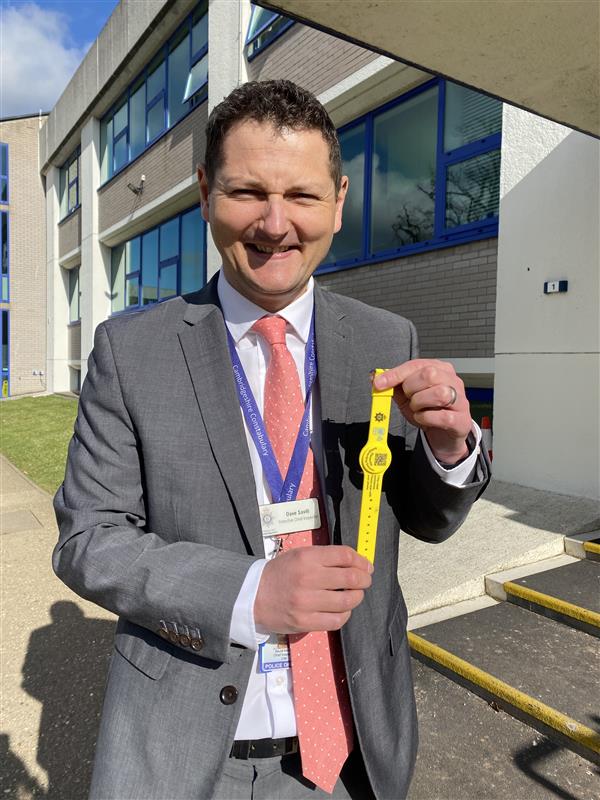
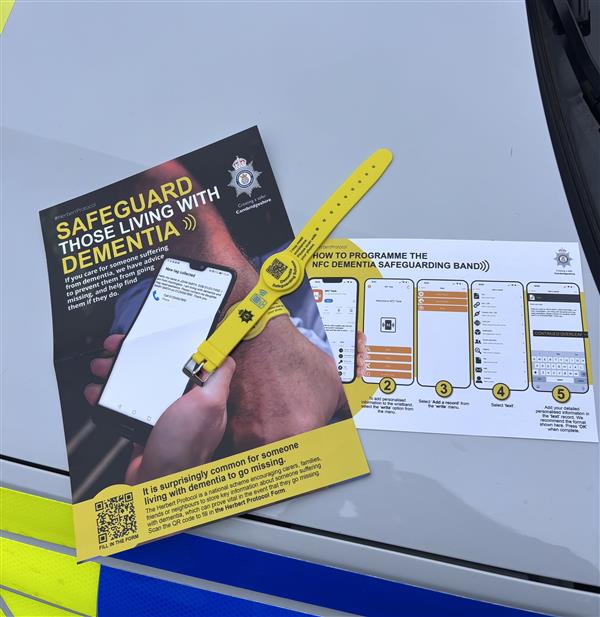
Dear Resident, More than 470 people have taken extra steps to help keep their loved ones living with dementia in Cambridgeshire safe. Dementia Action Week, taking place next week (18-24 May), marks one year since we announced our support towards a project helping some of the most vulnerable members of society. Under the Dementia Safeguarding Scheme, members of the community who live with dementia have been offered a smart wristband, similar to a watch in appearance. The yellow wristband contains their next of kin’s contact name and number, allowing the person to retain their freedom and independence but also giving them an extra measure of safety if they forget where they are or how to get home.
Police have worked with partners and the NHS to identify those most vulnerable and in need of wristbands, but almost 50 wristbands have also been handed out proactively in the community by officers in just under a year. At the same time, the force launched a new Herbert Protocol online form which helps collate key pieces of information such as a physical description, familiar places, health details and an up-to-date photo - which can be invaluable to officers in their search for the missing person. A total of 475 forms have now been filled out online. The form can be completed at any stage after a person has been diagnosed with dementia. The person does not need to have gone missing to complete one.
‘Everything possible to protect vulnerable people’Detective Chief Inspector Dave Savill, of the force’s Protecting Vulnerable People unit, said: “We want to do everything possible to protect vulnerable people in our county and it is pleasing to see the statistics which support public uptake and encouragement in the scheme. “It is crucial that people living with dementia can get to a place of safety and security, with friends or family, as quickly as possible. As our social media posts, based on real examples from our call logs have shown, these wristbands have been helping to achieve that and reducing the demand on emergency services.”
There are more than 10,000 people in Cambridgeshire, and an estimated 982,000 people in the UK, living with dementia according to the Alzheimer’s Society. This is expected to rise to 1.4 million people by 2040. Dementia mainly affects people over the age of 65 but can also affect younger people. More than a third of people with the condition do not have a diagnosis. Members of the public who come across someone wearing a yellow wristband and looking lost or confused are asked to reassure them, and use their mobile phone to read the information on the band, which uses Near Field Communication (NFC) technology. A video explaining this in more detail can be found on the force’s YouTube channel. Over the past year the force has been highlighting the Herbert Protocol scheme with real examples from the call logs on social media thanking members of the public for their help, kindness and compassion.
Social media examplesExamples include a vulnerable man lost on the motorway, a missing man in a care home mistaken for a visitor and the story of an elderly lady totting up an £80 taxi fare - which was seen by 1.2million people and saw a spike of 24 forms completed online the following day. DCI Savill added: “We appreciate how distressing it is when a loved one with dementia goes missing. Unfortunately, this can be common and it is important family and friends are prepared. “Families using our Herbert Protocol form can help officers find a missing person faster, as they will have the answers to lots of important questions straight away at the start of the investigation, which assists us greatly. "This means that officers can be sent to find the missing person immediately, while other officers travel to the person making the report. “If you have a friend or family member who is living with dementia, please take the time to complete our Herbert Protocol form. Hopefully you will never need to use it, but should the need arise, it could make a big difference and reduce the amount of time the person is missing.” How can I fill out a form too?For more information and to complete the new online form, visit the Herbert Protocol page on Cambridgeshire Constabulary’s website. Kind regards, | ||||
Reply to this message | ||||
|


|